
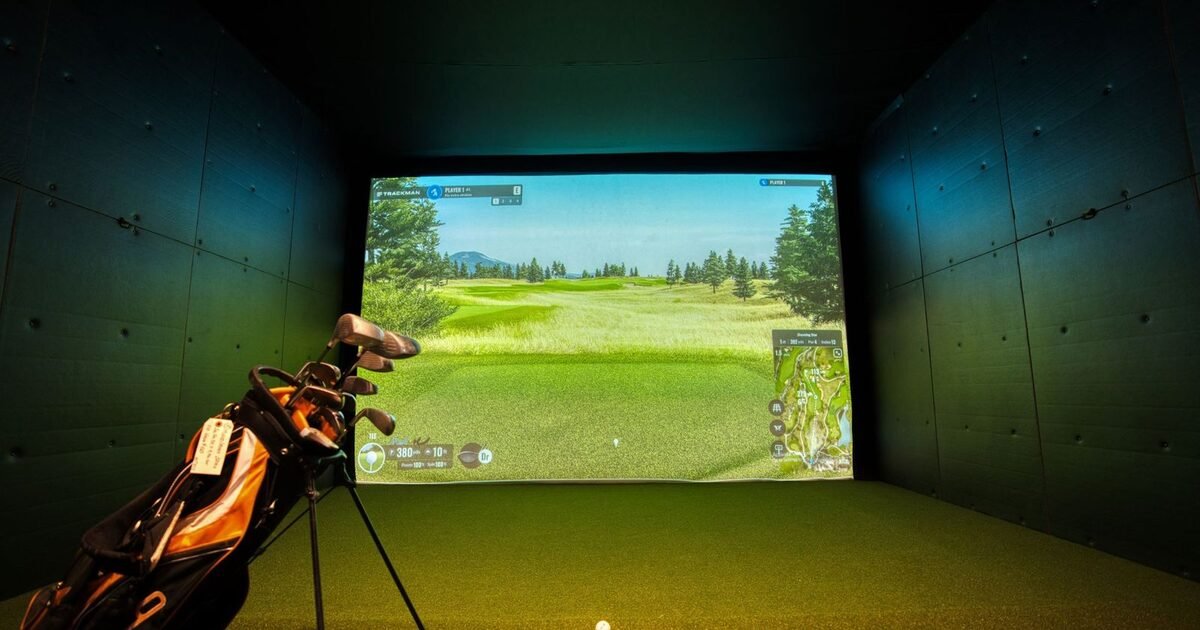
You finish a range session on a launch monitor, and the screen is full of numbers. Ball speed, spin rate, club path, attack angle. Which ones actually matter?
This guide has the most common TrackMan numbers explained in plain English: what each one measures and how coaches decide what to work on first.
You do not need to memorize every metric. A handful of them tell most of the story.
What a Launch Monitor Actually Measures
TrackMan is best known as a Doppler radar system, and current models pair radar with high-speed cameras: the radar tracks the ball through its flight, while club and impact data come from radar and imaging together. Other systems rely primarily on cameras, and each approach has its strengths, but the numbers they report are largely the same ideas.
The numbers fall into two families. Ball data describes what the ball did. Club data describes how the club was delivered to produce it.
One caution before the definitions: sign conventions and even some definitions vary between systems and software versions. Always check which system produced a number before comparing it to someone else's.
The Ball Numbers
Ball Speed
How fast the ball leaves the clubface, usually in miles per hour. Ball speed is the single biggest ingredient in distance, which is why coaches often look at it first.
Launch Angle
The vertical angle the ball takes off at, relative to the ground. Launch angle works together with ball speed and spin to shape trajectory and carry distance.
Spin Rate
How fast the ball spins, in revolutions per minute. Spin influences both height and curve. Too much or too little for a given shot costs distance or control, and useful spin depends on the club and the player.
Carry Distance
How far the ball flies before it lands. For most golfers, carry matters more than total distance because it removes the guesswork of bounce and roll.
The Club Numbers
Club Path
The horizontal direction the clubhead is traveling at impact, relative to the target line. A positive number means the club is moving to the right of the target for a right-hander (out to in is negative, in to out is positive on most radar systems).
Face Angle
Where the clubface points at impact, relative to the target. Face angle is the biggest factor in the ball's starting direction, which is why coaches watch it so closely.
Attack Angle
Whether the club is moving down or up at impact, and by how much. Irons are usually struck on a downward attack, while many players benefit from an upward attack with the driver.
Smash Factor
Ball speed divided by clubhead speed: a simple measure of how efficiently energy moved from club to ball. Centered strikes produce higher smash factors. For drivers, values approach a rule-limited ceiling, so it works best as a strike-quality check rather than a target to chase.
What Good Numbers Look Like
There is no universal leaderboard. Good numbers depend on your clubhead speed, your equipment, and the shot you are trying to hit. A launch and spin combination that suits one player's driver can be wrong for another.
Fitters and coaches read numbers in combinations rather than isolation. Launch angle means little without spin; spin means little without speed; path means little without face angle.
The most useful baseline is your own. Track your averages over time, and treat big deviations from them as information, not emergencies.
How Coaches Prioritize the Screen
Every coach has their own order. One illustrative approach starts with the outcome and works backward: first ball speed and carry - is the ball going far enough? Then start direction, which points to face angle. Then curvature, which points to the relationship between face and path.
That last relationship is the heart of the modern ball flight laws: the face largely sets where the ball starts, and the face-to-path difference shapes how it curves.
Only after those come efficiency checks like smash factor, and delivery details like attack angle. The real priority always depends on the player's actual miss and goals, but working backward from the outcome is a practical way to avoid chasing the wrong number.
Frequently Asked Questions About TrackMan Numbers
Do I need a launch monitor to improve?
No. Launch monitors measure what happened; they do not fix anything by themselves. Many players improve with good coaching and ball-flight feedback alone, though a monitor can speed up diagnosis and make progress measurable.
Why do my numbers differ between systems?
Different hardware measures different things and calculates the rest. Radar tracks flight outdoors; camera systems measure the first moments after impact indoors. Calibration, altitude, ball type and software version all shift the readouts, so compare like with like.
Is there one number I should care about most?
If you had to pick one, carry distance tells you the most about real-world results, because it blends speed, launch and spin into the outcome you actually play with. But no single number explains a swing on its own.
Keep Exploring the Science of the Swing
Launch monitor data is one window into a bigger picture. Understanding the modern ball flight laws - how face angle sets start direction and the face-to-path relationship shapes curve - is the natural next topic, and a dedicated guide is on the way.
For a deeper reference, TrackMan's own guide walks through its metrics in detail. And there are more guides like this one at Open Forum Golf.